
The post-American internet ⊗ Scanning the present through a polycrisis lens
No.386 —AI is changing the physics of collective intelligence ⊗ When the future isn’t somewhere else ⊗ Claude in healthcare and the life sciences ⊗ An enzyme that can break down polyurethane ⊗ 7,000-year-old underwater wall
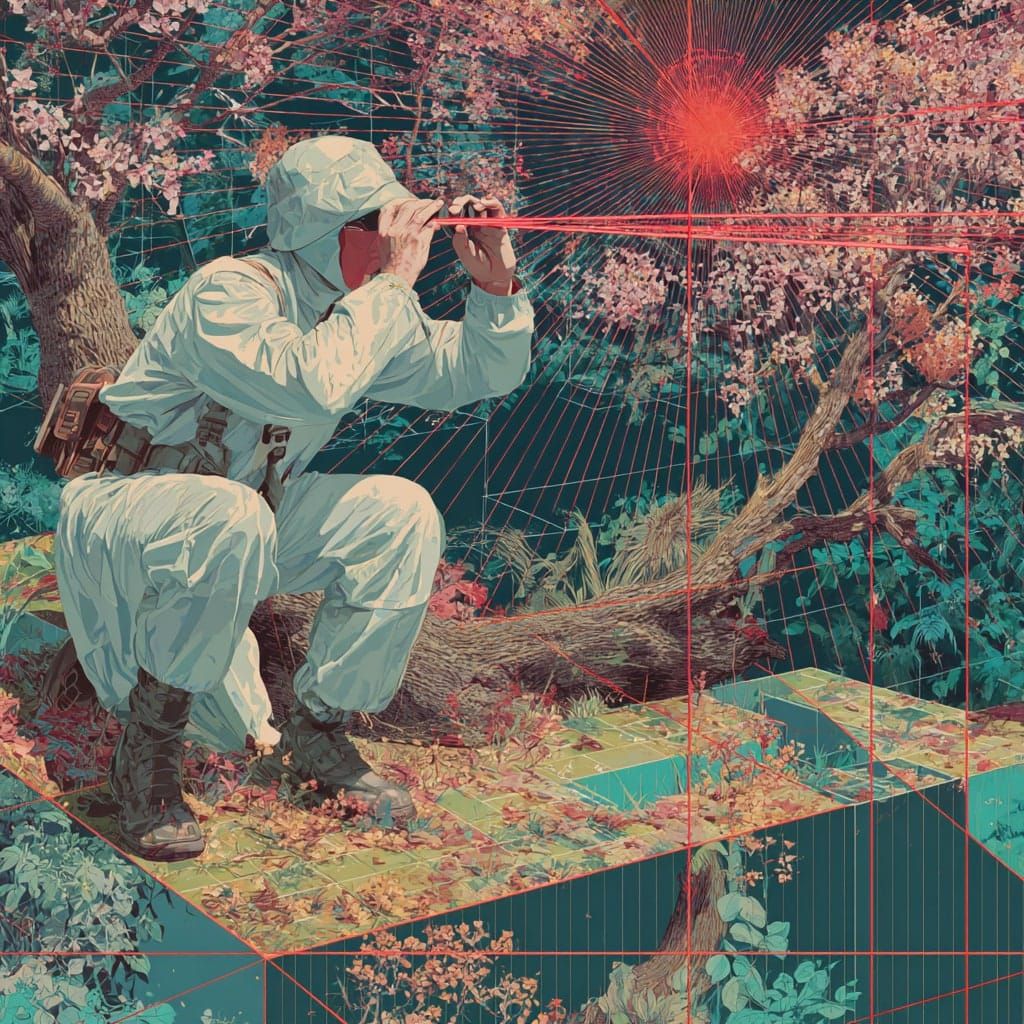
The post-American internet
In this long read, Cory Doctorow uses his colourful, lively, and zinger-filled writing to explain his vision for a “project of building a post-American internet: a project to reduce tech debt, to unlock America’s monopoly trillions and divide them among the world’s entrepreneurs (for whom they represent untold profits), and the world’s technology users (for whom they represent untold savings); all while building resiliency and sovereignty.” He says he his simply hopeful that this scenario can happen, but at the same time paints a portrait that is almost utopian. On the other hand, his opinion of bosses re AI and corporations writ large, is bleak af—I don’t necessarily disagree, it just might be a bit too strident to convince some people.
In between those (to me) extremes, Doctorow makes an excellent argument “that we’ve got a new coalition in the War on General Purpose Computers: a coalition that includes the digital rights activists who’ve been on the lines for decades, but also people who want to turn America’s Big Tech trillions into billions for their own economy, and national security hawks who are quite rightly worried about digital sovereignty.”
He identifies multiple vulnerabilities in the current US-dominated internet architecture that the TACO’s chaos has exposed. There’s the legal infrastructure: anticircumvention laws like the DMCA’s Section 1201, which the US Trade Representative forced on the world through trade agreements, making it illegal to jailbreak devices or build interoperable alternatives without manufacturer permission. There’s the physical infrastructure: most transoceanic fibre optic cables make landfall in the US, where the NSA has been tapping them since at least 2006—a “hub-and-spoke” topology that only worked when the world trusted America not to abuse its centrality. And there’s the software infrastructure: the world’s governments and businesses locked into US cloud services that can be weaponized (as Microsoft allegedly did to the ICC) or remotely disabled (as John Deere did to looted Ukrainian tractors).
Doctorow’s solution threads through all three: repeal anticircumvention laws to enable adversarial interoperability and migration tools, then build digital sovereignty on open-source, commons-based software, like the EU’s Eurostack project, that can be collectively maintained, audited, and localized by institutions worldwide. The door is “open a crack,” he argues, and the first country to walk through it becomes the “disenshittification nation” supplying freedom-enhancing tools to the rest of the world. (Go Canada! <dubious emoji />)
I assume you’ve spotted the pattern by now: the US trade representative has forced every one of its trading partners to adopt anticircumvention law, to facilitate the extraction of their own people’s data and money by American firms. But of course, that only raises a further question: Why would every other country in the world agree to let America steal its own people’s money and data, and block its domestic tech sector from making interoperable products that would prevent this theft? […]
This has been a long time coming. Since the post-war settlement, the world has treated the US as a neutral platform, a trustworthy and stable maintainer of critical systems for global interchange, what the political scientists Henry Farrell and Abraham Newman call the “Underground Empire.” But over the past 15 years, the US has systematically shattered global trust in its institutions, a process that only accelerated under Trump. […]
There’s one post-American system that’s easy to imagine. The project to rip out all the cloud connected, backdoored, untrustworthy black boxes that power our institutions, our medical implants, our vehicles and our tractors; and replace it with collectively maintained, open, free, trustworthy, auditable code. […]
Bosses like to tell themselves that they’re in the driver’s seat, but really, they fear that they’re strapped into the back seat playing with a Fisher Price steering wheel. For them, AI is a way to wire the toy steering wheel directly into the company’s drive-train. It’s the realization of the fantasy of a company without workers. […]
Let’s call time on enshittification. Let’s seize the means of computation. Let’s build the drop-in, free, open, auditable alternatives to the services and firmware we rely on.
Related → In The dream of the universal library, Monica Westin examines another early-2000s digital promise that failed to materialize: the universal library. Like Doctorow’s post-American internet, the dream of making every digitized book accessible online was blocked by copyright law—specifically, the 70% of scanned books trapped in legal limbo (under copyright but commercially unavailable). Westin proposes practical licensing reforms similar to what the EU implemented in 2019, rather than overhauling copyright entirely. She highlights a bitter irony; that these books are likely fully accessible to train Google’s LLMs while remaining locked away from human readers. She concludes that “the universal library is near, but it’s up to us to ensure that humans, not just AIs, have a card.”
Scanning the present through a polycrisis lens
Bryan Alexander revisits the concept of a polycrisis, where multiple overlapping crises—such as demographic shifts, climate change, geopolitical tensions, and technological developments—interact and exacerbate one another. He illustrates this with current examples like protests in Iran, immigration challenges in the US and Europe, and the US seizure of Venezuela’s president, showing how these crises intertwine with national power struggles and broader global trends. Alexander highlights how technology, including AI and communication tools like Starlink, plays a significant role in these events, influencing both governments and opposition forces. He concludes that national elites are increasingly struggling to maintain control amid these compounded pressures, which may lead to a more inward, locally focused mindset worldwide.
Demographic changes can drive foreign policy, such as opening borders to immigration or waging wars before the fighting-age population drops below a certain level. […]
I also infer a connection to anxieties about the demographic transition in the right’s doubling down on a fierce masculinity as part of traditional gender roles, with the call for women to have more children. We can add an intra-elite competition as well, as the two leading American political parties fought over immigration policy. Macroeconomic factors also powered this story, as sending nations’ economies offered fewer opportunities, while Americans tended to avoid the hands-on jobs immigrants perform.
Related → At one point, Alexander writes; “One difference from the American case is that the European economy has been struggling.” I’d point you, and him, to this by Gabriel Zucman: The idea of a sclerotic Europe facing an American El Dorado has little basis in fact. “The US produces $81 in gross value per hour worked, but at a particularly high environmental cost. The EU produces $71 per hour, yet with far lower carbon emissions. More leisure time, better health outcomes, greater equality and lower carbon emissions, all with broadly comparable productivity: Europeans can be proud of their development model, which is, on the whole, far more compelling.” 🗄️
§ AI is changing the physics of collective intelligence—how do we respond?. “Inside collaborative processes, AI can capture rich, real-time transcripts of discussions; distill arguments, rationales, and assumptions into structured forms; and track who said what, linked to which evidence, with what level of agreement. This makes the tacit more legible.”
Futures, Fictions & Fabulations
- When the future isn’t somewhere else. “In futures work, we talk about weak signals—early indicators that point to larger systemic shifts. Immigrant communities have not been offering weak signals. They have been offering strong, persistent evidence of a system under strain. The failure here was not a lack of foresight. It was the decision to treat lived experience as anecdotal rather than authoritative.”
- Motion to redefine VUCA as Violent, Unfair, Confusing, and Absurd. It’s a one phrase post by Jorge Camacho on LinkedIn, then amended to Dark VUCA. Not much to read, but as I commented, I thinks it’s very much on point so there you go, an updated VUCA (volatility, uncertainty, complexity and ambiguity).
- Eventbrite Social Study 2026: Event trends shaping the year ahead. “Reset to Real captures a cultural shift back to live experiences that feel human, unfiltered, and alive. See what’s driving the next wave of IRL culture.”
Algorithms, Automations & Augmentations
- Advancing Claude in healthcare and the life sciences. “A complementary set of tools and resources that allow healthcare providers, payers, and consumers to use Claude for medical purposes through HIPAA-ready products. Second, we’re adding new capabilities for life sciences: connecting Claude to more scientific platforms, and helping it provide greater support in areas ranging from clinical trial management to regulatory operations.”
- Brands say Amazon’s ‘Buy for Me’ is listing products without permission. No shame. “‘Buy For Me’ uses ‘agentic AI capabilities’ to provide third-party websites with shoppers’ encrypted payment and shipping information, according to Amazon. Still, several merchants said that, to shoppers accustomed to scrolling Amazon’s marketplace, the listings can resemble a typical Amazon product page, potentially giving the impression that a brand is selling directly on Amazon, even if the transaction ultimately happens elsewhere.”
- Microsoft responds to AI data center revolt, vowing to cover full power costs and reject local tax breaks. I’m not holding my breath. “The new plan, announced Tuesday morning in Washington, D.C, includes pledges to pay the company’s full power costs, reject local property tax breaks, replenish more water than it uses, train local workers, and invest in AI education and community programs.”
Built, Biosphere & Breakthroughs
- Neural network finds an enzyme that can break down polyurethane, “the polymer commonly used to make foam cushioning, among other things. The new enzyme is compatible with an industrial-style recycling process that breaks the polymer down into its basic building blocks, which can be used to form fresh polyurethane. … Given a dozen hours, the enzyme can turn a foam pad into reusable chemicals.”
- Inside the world’s largest indoor vertical farm: A fully automated hydroponic farm powered by tech - YouTube. Singapore’s “Greenphyto is a fully automated hydroponic farm powered by artificial intelligence and advanced manufacturing bots. The five-storey building occupies 2ha of land and can produce 2,000 tonnes of greens a year at full capacity.”
- A tree’s bark can take a huge bite out of climate change. “The trillions of microbes inhabiting tree bark can suck up planet-warming gases, scientists have discovered.”
Asides
- 7,000-year-old underwater wall raises questions about ancient engineering. “Scientists have identified a stone wall nearly 400 feet long, lying 30 feet beneath the surface of the Atlantic Ocean. It was built by hunter-gatherers more than 7,000 years ago, though its purpose remains uncertain. Researchers speculate it may be the source of local legends of a city swallowed by the sea.” (Via Kottke.)
- Thousands of dinosaur footprints discovered in remote Italian Alps. “A wildlife photographer who was exploring a remote pocket of the Italian Alps has discovered thousands of dinosaur footprints preserved in the vertical face of a mountainside.”
- Sesame Street refresh with David Gallo. “Scenic designer David Gallo takes us behind the scenes of his work refreshing Sesame Street, balancing history with modern storytelling. From relocating Oscar the Grouch to uncovering forgotten set details, Gallo shares how he approached updating an iconic space while preserving its magic.”