
Humans are better than we think ⊗ The bots are just the closers
No.423 — New alliance open to like-minded countries ⊗ Shaping glocal tomorrows ⊗ The Three-Layer Cake ⊗ Drones are reseeding Canada ⊗ A macro journey underwater
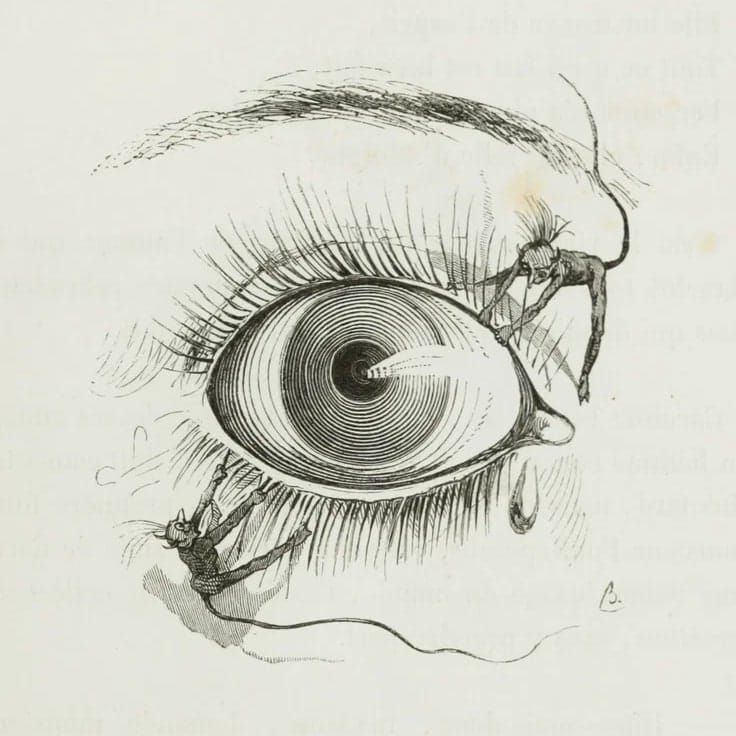
The influence of psychopaths: why humans are better than we think
I’ve been meaning to feature something about dark triads (machiavellianism, sub-clinical narcissism, and sub-clinical psychopathy), and this piece by Nate Hagens does part of that, explaining how a small minority of psychopaths ends up shaping the behaviour of everyone else. Around one percent of adult men and one-fifth of one percent of adult women are clinical psychopaths, roughly 30 million people, with many more showing the same traits at subclinical levels. For most of our history, small bands kept them in check: everyone saw what you did, and cheating was met with lost reputation, exclusion or banishment. Agriculture removed that check: surplus could now be stored, and, as Luke Kemp points out, looted, so taking what others had stored “finally” paid.
His argument rests on the gap between the median and the mean. Most people cluster around reciprocity and fairness, but a thin tail of predatory behaviour drags the mean toward the antisocial end, the way a few huge incomes pull average income well above the median. Then the median itself slides. When cheating is visible and goes unpunished, people who cooperate, as long as others do the same, start giving less. Trust gives way to contracts and surveillance, misconduct spreads by example, and the few who push back burn out. Scale amplifies all of it. Psychopaths gain outsized influence at chokepoints in finance, media, politics and the large platforms, where moral and emotional content spreads faster and falsehood outruns truth. What we see of humanity in the headlines is largely the tail, and decent people adapt to that picture by guarding themselves. Hagens doesn’t mention it, but I see it as analogous to the Overton window, a shift in what can be discussed and a shift in what one does in the world.
The hopeful part of his argument is that the baseline hasn’t changed: people still return lost wallets full of cash, coach youth teams and flash their brights to warn a stranger. In Hagens’ words, “the median behavioural traits of humanity have not vanished; they’ve just been outcompeted by structures that amplify the behaviours of the tail.” He adds that empathy works like a sense organ that only helps when we can see what bad actors are doing, which makes visibility the main lever. His suggestions include shorter feedback loops and real costs for lying, institutions that reward groups and long horizons over individual wins, status that goes to people who maintain and repair, transparency in banking and platform algorithms, and showing up where local rules are written. The aim is to let the median pull the mean back toward decency.
Some evolutionary theories suggest that traits associated with psychopathy, such as low empathy, fearlessness, and aggression, may have offered advantages – for example, intimidating rivals, exploiting others for resources, or pursuing short-term mating opportunities. […]
Fast, proportionate, and very public consequences for deception in industries like finance, media, and governance. Among other things, this would require audit trails, transparent rules, and arrangements that support truth-seeking and the median human’s values. […]
We can celebrate people who maintain systems, teach skills, reduce fragility, and have prosocial demeanors. Humans are always going to chase status, so we need to change cultural ideals toward ones that our civilization and the biosphere need. […]
There is a huge difference between who we are as individuals and how our aggregate culture expresses itself in the world. It may seem like where we’ve landed was inevitable. Maybe it was, maybe not. But being aware of this and integrating it into our model of reality, in my opinion, is a necessary first step toward more benign futures.
§ Québec City mayor turns profanity into positivity by helping raise $143K for shelter. A fantastic judo move to make lemonade out of adversarial lemons. Listening to the original comment (basically yelling “f you” to the mayor), one might experience a moment of discouragement with society. The impromptu campaign showed that, on the contrary, a lot of people care. The kind of shift in perspective that Hagens talks about above. De-normalise the psychos, emphasise the good. [En français.]
The bots are just the closers
At the People’s AI Assembly in New York, organised by the AI Now Institute and More Perfect Union, Naomi Klein—in conversation with Arundhati Roy, moderated by Karen Hao—argued that AI is spreading partly because so many people are desperate to get out of lives that were already inhuman before the bots arrived. She talks about her own relief when the pandemic emptied her calendar, then gives the example of one of her graduate students. Where she comes from, hours are gruelling and pay is low, and “everyone wants their own slaves”: AI agents as copies of yourself, doing the work so you don’t have to. “The bots show up to finish the job. They are the closers in a bad deal stretching back decades.” The same goes for social media, where, as Roy has pointed out, we already talk like chatbots. Beneath the questions of what to regulate, nationalise or abolish, Klein places a larger one: how to make life liveable enough that people are less tempted to subcontract it to bots. It echoes the argument of her new book with Astra Taylor, that the end of the world loses its allure when people have reasons to stay rooted in this one.
Asked why they still write when language is so abundant, Klein recalls John Berger telling her that The Shock Doctrine made him feel calm. We live in structures designed to confuse us, and someone who does the work of ordering that chaos gives others a point of calm. That, she writes, is what Sam Altman’s idea of intelligence as a utility misses: “the figuring out is the point.” Roy compared the AI companies to the East India Company fusing with the state, and concluded that the data centre, climate and arts fights are one front line. Klein ended on Milton Friedman’s theory that only a crisis produces real change, and that what follows depends on “the ideas that are lying around.” When the bet these companies have placed on the whole economy goes bad, she expects another window for change and wants the boldest demands—democratic socialism in her case—ready to be put forth and into action.
The stillness of that year gave me time to consider this, and one of my conclusions was: I want to live differently. In such a way that, if all my commitments suddenly vanished once more, I’d be deeply disappointed. Because I would actually want to do those things, with my full being. […]
My case to you is that AI is surging through our culture, in part, because so many people are desperately trying to get out of their lives. With very good reason: a great deal of it is impossible and inhuman already, well before the bots arrive. […]
[What this means is that] to beat the tech oligarchs, we will all have to become more human, more loving, more animate, more present. In our bodies, our cities, our towns, our communities, in this living world. […]
That, I believe, is our basic function: to develop alternatives to existing policies, to keep them alive and available until the politically impossible becomes politically inevitable.”
§ Canada and EU announce new alliance open to like-minded countries. “Speaking to reporters on Friday from Montreal, the prime minister, Mark Carney, and the European Commission president, Ursula von der Leyen, called the new partnership the Alliance for the Future and said the ‘deepest possible partnership between Canada and the 27-member bloc had the potential to offer unprecedented stability and opportunity.’” Quick reminder of my short post The map fiction missed on the same topic.
“Ambitious, thoughtful, constructive, and dissimilar to most others.
I get a lot of value from Sentiers.”
If this resonates, please consider becoming a supporting member—it keeps this work independent.
Futures, Fictions & Fabulations
- Shaping glocal tomorrows: complexity, empirical tools, and anticipatory governance. “How do we move from global macro-trends to regional action when everything seems to change at once? Reflections on complexity, AI-supported foresight and the rise of ‘futures governance’.”
- The futures of AI. “This project is a non-profit research initiative that combines foresight, systems, and stories to explore how the futures of artificial intelligence (AI) will evolve over the coming years in the American context. Our aim is to help all stakeholders impacted by AI navigate socio-economic and political upheavals we are currently experiencing.”
- What future is this lesson for? “Understanding by Design, or UbD, deserves renewed attention in this context. It is usually discussed as a framework for curriculum coherence. Read through a futures lens, however, UbD can also be understood as a practical tool for making the future assumptions of education more explicit.”
Algorithms, Automations & Augmentations
- The Three-Layer Cake: A Report. “Public-Interest Information in an AI-Intermediated Age. This report brings together what we learned in our first year of convenings and conversations with journalists, technologists, funders and others.”
- Seeing that ChatGPT is building detailed psychological profiles of its users, that OpenAI said its AI agents disabled their own safety monitors, and that a growing majority of Americans are convinced that AI is bad for society reminded me, again, of this great quote by mister Brian Eno. “All my misgivings about AI really are to do with the fact that it’s owned by a group of people that I don’t trust at all. I don’t trust their taste, I don’t trust their morals, and I don’t trust their politics, and that’s a problem for me—that the whole technology is in the hands of the wrong people.”
- No signs of AI payoff outside the tech sector. Oupsy. “Despite massive investments and widespread hype around artificial intelligence, the technology has delivered zero financial payoff to corporate America outside of tech. … The bottom line is that the AI story will be decided in the S&P 493, not the Mag 7, and so far, there is no evidence that revenue growth or margins are improving outside the tech sector.”
Built, Biosphere & Breakthroughs
- How drones are reseeding Canada’s wildfire-scarred forests. “Québec lost about 4.5 million hectares of forest to fire in 2023, more than the area of Switzerland. Three years on, the dead trunks are still standing, and drones are flying between them, shooting seed pods into the soil.”
- In Nigeria, solar panels are the new wedding gift. “By the end of last year, small-scale solar capacity in Nigeria comfortably exceeded what the grid delivers. This year, the country has already added as much capacity as it did in 2024 and 2025 combined.” (archive.ph)
- Malls are becoming the midtowns of the future. “Today, Lloyd Center, like many of its peers around the country, is struggling with high vacancies and low foot traffic. In response, its owner, Urban Renaissance Group, hopes to usher in its next evolutionary phase. A proposal is working its way through Portland’s planning process to redevelop the mall into a neighborhood with new open spaces and through-streets, ground floor shops, and as many as 5,000 homes rising in slender towers.”
Asides
- A macro journey underwater reveals the radiant geometries of coral. “Armed with high-magnification macro lenses, filmmaker Sandro Bocci journeyed through coral reefs to document a striking array of color, texture, and pattern. A project for Bocci’s collective Julia Set Lab, the short film homes in on the intricacies of a life form we can’t see with the naked eye.”
- Japan launches mission to bring home a piece of the Martian moon Phobos. “‘The MMX [mission] we launched today is a challenging mission aiming for the world’s first sample return from the Martian moons,’ said Yoshihiro Seki, Japan’s science minister. ‘We hope that the results obtained through this mission will contribute to the development of our nation’s space science and exploration technology.’”
- Elon Musk’s AI Odyssey review – the dullest, most pointless riposte possible to Christopher Nolan’s brilliant epic. Pardon my schadenfreude. “It is hardly a shock that Grok AI’s interpretation of Homer is as meaningless as a laptop screensaver. The only surprise would be if Musk accepted defeat graciously. Which he won’t.”
If you’d like to support the newsletter, please share it with a friend or colleague who you think might enjoy it. I appreciate the help!